Sasha Lantukh
3. When Everything Can Look Finished, Nothing Stands Out
Does it need to?
January 30, 2026
AI feels less like the printing press and more like Microsoft Word.
Once, when there was only one printing press in town, typography was beautiful everywhere. Imagine a small notice in a public square:
“Notice: The market shall open at dawn. Merchants are requested to display wares neatly. Offenders shall be reported to the constable.”
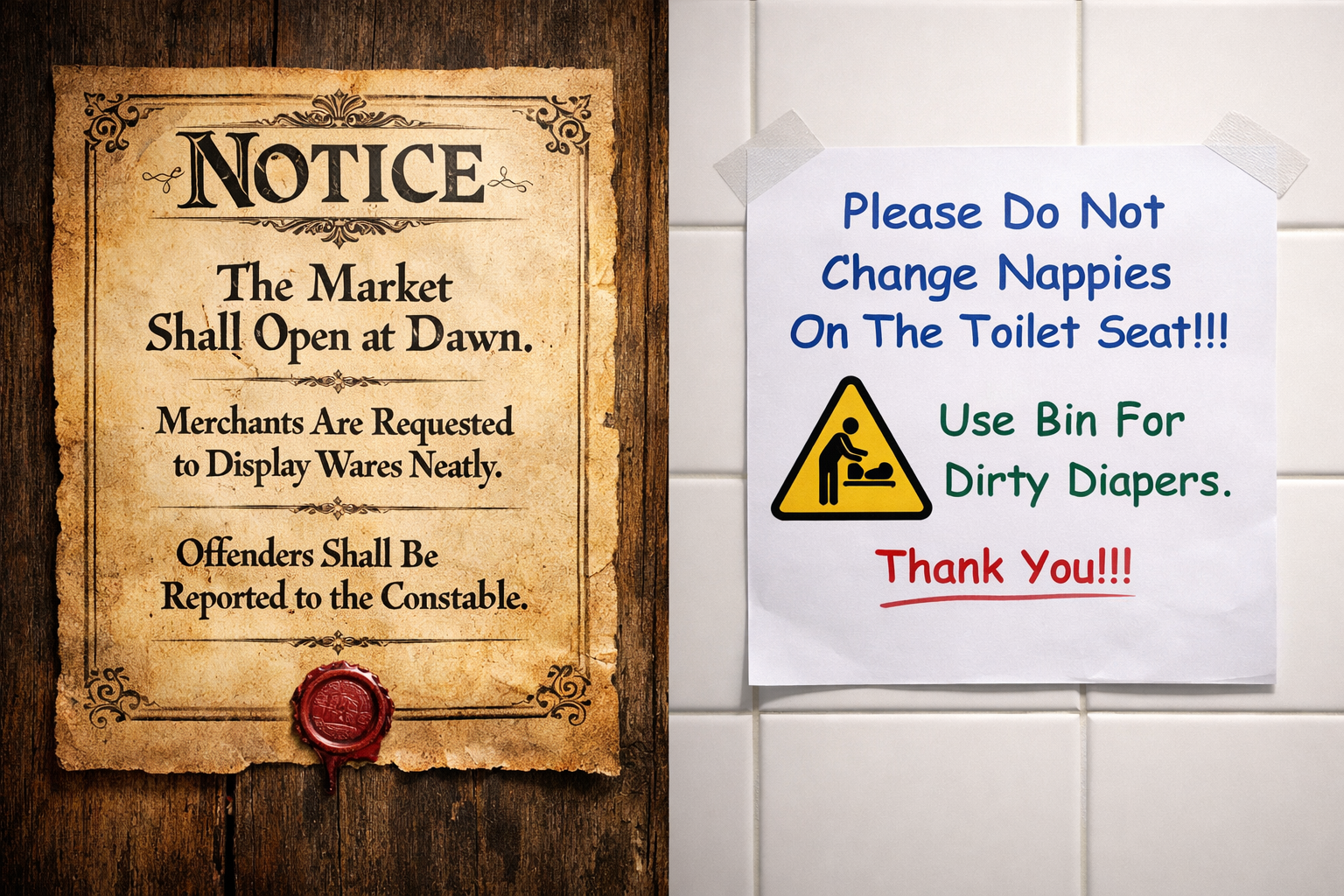
Each letter aligned, spacing measured, hierarchy clear — even the mundane felt considered.
Then Microsoft Word arrived. Suddenly, polite notices in public toilets looked tasteless. Comic Sans on a warning about nappies in a loo? Really?
Is AI doing something similar for ideas? With a twist: it makes them passable, serviceable, solving 99% of problems with no fuss. It removes the friction between what people think and what they can put out. Most professional writers, designers, developers? Their numbers will shrink — and simply being a professional won’t cut it. Success will come from generating ideas, solving problems, and knowing when not to hand everything to AI. But at the same time, hundreds — thousands — more non-professionals can now share ideas that used to die on blank pages. That’s good, isn’t it?
Skilled people who can still afford to choose not to use AI will skyrocket in value. Think medieval-style wall restorers for Grade II listed buildings: rare, expensive, essential.
Most problems don’t need craft, taste, or effort to be solved — and that’s fine. Bad typography solved 99% of public toilet signage. AI will solve 99% of the skill gap in putting ideas out… and maybe that’s good overall.
The divide won’t be AI vs non-AI work. It’ll be between people who let AI decide for them, and people who can choose when not to use it.
P.S. Written with the help of ChatGPT… in a few hours. The image? Also AI-generated.
NEXT UP
Got a project in mind?
Let's chat — book a call, or