Sasha Lantukh
13. The Lost Decade of Car UX
How the car industry traded ergonomics for aesthetics — and why it took ten years to notice.
June 5, 2026
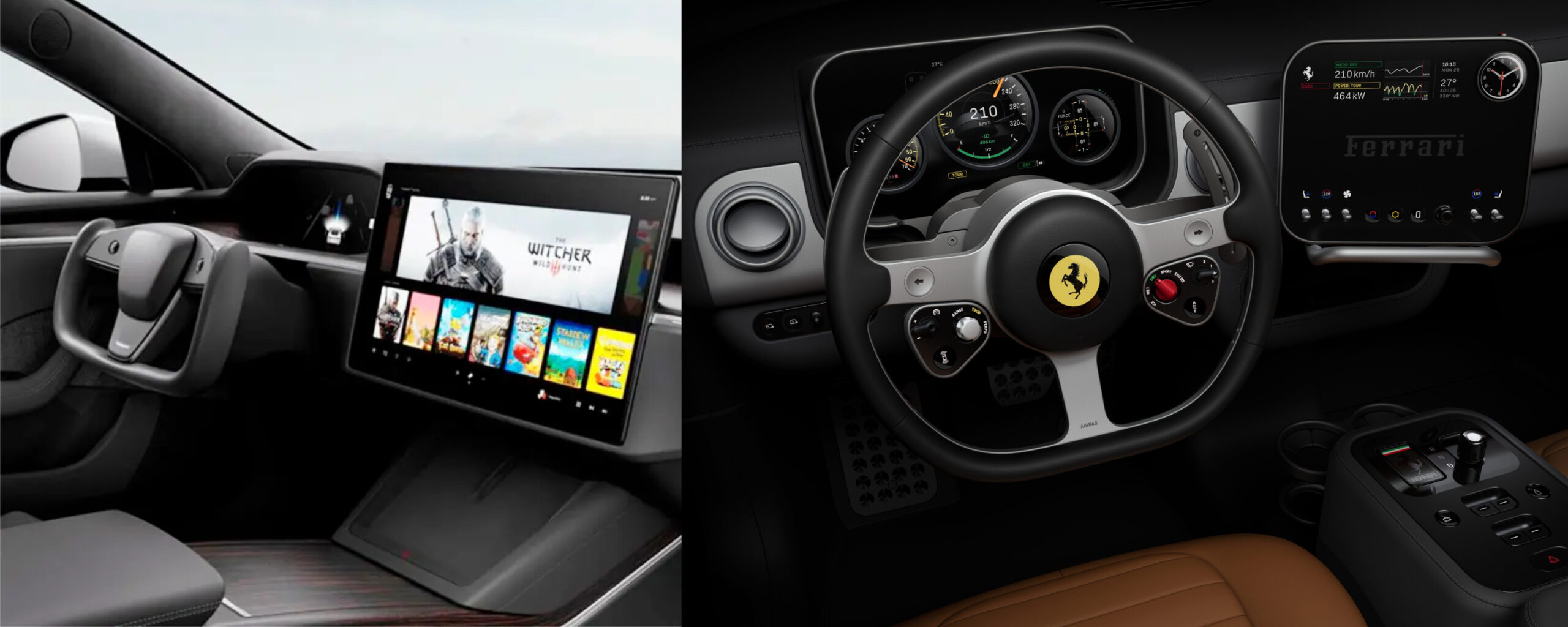
There’s a feeling when you see something obviously right — when you ask, immediately, why did this take so long? That’s what the Ferrari Luce interior does. Physical dials. Metal switches. Screens present but not in charge. A cabin designed around driving, not around the idea of driving.
It looks inevitable. Which means it wasn’t.
By the mid-2000s, car interiors had reached something close to maturity. The interaction model worked. You reached for the volume knob without looking. You adjusted climate by feel. Brands like Audi had refined this. The Q3 wasn’t exciting but it was perfectly solved.
Then Tesla changed the frame. The screen became a symbol. One enormous touchscreen, everything in it — and because it read as advanced, others copied the signal rather than the reasoning. Status imitation replacing usability logic.
What followed was regression dressed as progress. Laggy interfaces, climate controls buried two taps deep. Glass surfaces that gave you nothing back but glare. Objectively worse for driving — but visually contemporary, so it spread.
⁂
The correction came from friction. Drivers noticed the lag. Researchers noticed the distraction. Tesla quietly reintroduced stalks. Others started putting physical controls back into at least their concept cars.
What Ferrari and LoveFrom did with the Luce isn’t radical — that’s the point. Screens are there, doing what screens do well. But key interactions stay physical, where it matters. Restraint as the design decision. The cabin described, simply, as “simplified in the service of driving.”
It reads as obvious the moment you see it. The only reason it feels revelatory is that we spent a decade being told the opposite. That’s the lost decade. Transitional era cars won’t age well. The Luce will age well, the way Ferraris always do — not because it’s timeless, but because Ferrari never designs to the moment. They design something entirely their own, and the moment catches up eventually.
Correctness has a longer shelf life than novelty. I hope my pre-screen car lasts long enough to skip this generation entirely.
NEXT UP
Got a project in mind?
Let's chat — book a call, or